Your Art Is a Gift – Creative Ways to Share It This Christmas
 Kerri Dixon

Discover creative ways to turn your artwork, even unfinished paintings and practice pieces, into meaningful Christmas gifts and keepsakes.
Your Art Is a Gift – Creative Ways to Share It This Christmas
Have you got a collection of paintings tucked away in a drawer or cupboard because you don't think they're good enough to show anyone?
Perhaps there's a painting that didn't quite turn out the way you'd hoped. Maybe the colours weren't right, the proportions were a little off, or you simply lost interest halfway through.
Well, before you throw those paintings away, I want you to look at them a little differently.
Because that artwork you've been hiding away might just make the perfect Christmas present!
And no, I'm not suggesting you frame up all your unsuccessful paintings and give them to unsuspecting relatives. Haha!
I'm talking about finding new ways to use your artwork, whether that's turning it into greeting cards, fabric, cushions, calendars or something completely unexpected.
Your art doesn't have to be a masterpiece to make a wonderful gift.
6ad6b72985c46_lg.jpg)
The Painting You Don't Like Might Be Someone Else's Favourite
As artists, we can be incredibly critical of our own work.
We remember every mistake we made along the way. We know where the proportions aren't quite right, where we struggled with the colours or where we simply couldn't get something to work.
But here's the thing.
When someone else looks at our artwork, they don't necessarily see those mistakes.
They see the subject, the colours, the feeling or perhaps the memory it brings back.
And sometimes, something we consider a failure can become something quite beautiful when it's used in a different way.
Think about a flower painting that didn't quite work as a composition. Perhaps one little section of those flowers would make a gorgeous greeting card.
Or a wildlife painting where you're happy with the animal but not the background. What if you removed that background and used the animal as a design on a tote bag?
Suddenly, that painting has a completely different purpose.
And that's what I want you to start thinking about.
Instead of asking, "Is this painting good enough?"
Try asking, "What else could this become?"
From Practice Painting to Something Beautiful
I've actually got a couple of examples of this from my own art practice.
Some time ago, I created a couple of experimental backgrounds. They weren't intended to be finished artworks at all. They were simply backgrounds that I planned to paint something over the top of.
One was a soft combination of earthy greens, browns and turquoise, while the other was a much brighter experiment with blues, greens and yellows.
Luckily, I took photographs of them before going any further.
And I'm so glad I did!
Because when I started experimenting with putting these designs onto products, I discovered they looked fantastic.
The softer background worked beautifully on a dress and little handbag, while the brighter, more colourful piece looked wonderful on cushions, tote bags and even a bucket hat.
Who would have thought?
Two backgrounds that were never intended to be finished paintings suddenly became designs that could be used on all sorts of products.
It really made me think about how often we overlook the possibilities in our own artwork.
Sometimes the painting itself isn't the finished product. It's simply the beginning of something else.
1. Turn Your Artwork into Greeting Cards
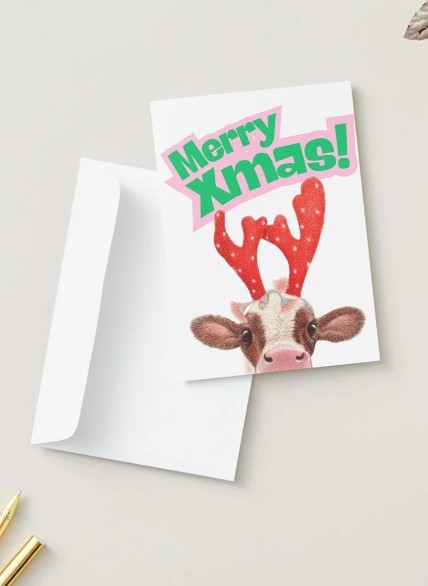
One of the easiest ways to share your artwork is by turning it into greeting cards.
And with Christmas coming up, now is a wonderful time to give it a go.
You don't need to create a whole collection of Christmas-themed paintings either.
A beautiful bird, a favourite animal, a landscape or even an abstract painting can make a lovely card.
You could use an existing painting, photograph or scan it, and have cards professionally printed. Or you could print them yourself and attach them to blank card stock.
Another lovely idea is to create small original paintings directly onto cards.
Imagine someone receiving a Christmas card with a little original bird painting on the front. That's something they might keep long after Christmas is over.
And don't forget about gift tags!
A small section of a painting could be cropped, printed and turned into personalised tags for your Christmas presents.
It's a simple way to make your gifts feel extra special.
6ad6b7570dc7d_lg.jpg)
2. Create Gifts from Your Existing Artwork
This is where things get really interesting.
There are so many products available now that can be personalised with your own artwork.
Think about:
- Cushions and tote bags
- Tea towels and fabric
- Notebooks and journals
- Calendars and bookmarks
- Mugs and coasters
- Jigsaw puzzles
- Clothing and accessories
- Christmas ornaments and decorations
And the artwork doesn't have to be a traditional finished painting.
Sometimes an abstract colour study works better on fabric than a detailed realistic painting.
You could even take a little botanical study, remove the background and repeat the design to create a fabric pattern.
Imagine a collection of gum leaves or flowers repeated across a tea towel.
Or a little bird illustration printed onto a notebook for someone who loves wildlife.
The possibilities are almost endless.
The important thing is to stop thinking of your artwork as something that can only hang on a wall.
It can become something useful, something decorative or something that makes someone smile every time they use it.
3. Small Original Paintings Make Wonderful Gifts
Of course, not everything needs to be professionally printed.
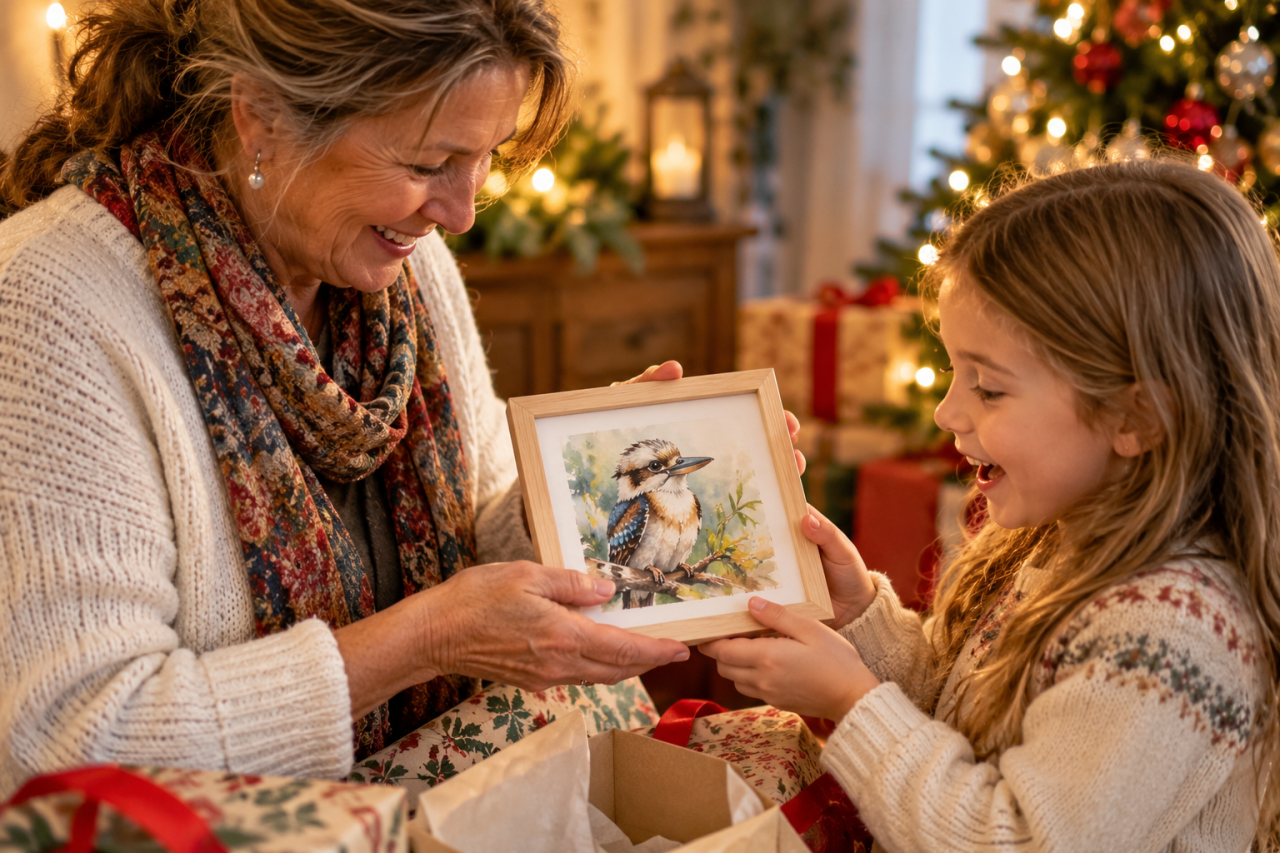
Sometimes a small original artwork is the most meaningful gift you can give.
And it doesn't have to be large or complicated.
A miniature painting of someone's favourite bird, a beloved pet or a special place can be incredibly personal.
You could create a little series of wildlife paintings, perhaps three small birds that could be displayed together.
Or paint a tiny landscape of somewhere that holds special memories for the person receiving it.
For those who love working in pastel, a small piece on Pastelmat can be a lovely project. Just remember that pastel paintings need to be properly protected when they're framed.
And if you're worried about how much time you have before Christmas, keep things simple.
Choose subjects you're comfortable with, work small and don't put pressure on yourself to create something elaborate.
A thoughtful little painting can mean far more than an expensive shop-bought gift.
6ad6b7d9bbf02_lg.jpg)
4. Create Seasonal Artwork for Your Home
Christmas is also a lovely opportunity to create artwork for your own home.
And living here in Australia, I think we have some wonderful subjects to choose from.
Rather than the traditional snowy Christmas scenes, why not paint some of our beautiful Australian wildlife?
Imagine a little kookaburra perched among gum leaves, a cockatoo surrounded by native flowers or a possum peeking out from a branch.
You could create small framed paintings to display each Christmas, handmade decorations or even a collection of festive botanical studies.
I particularly love the idea of painting one small Christmas artwork every year.
Imagine bringing those paintings out each December and seeing how your artwork has changed over time.
And for those of you with grandchildren, perhaps you could involve them in creating some decorations or little paintings too.
Those handmade treasures often become the things we cherish most.
5. Getting Your Artwork Ready for Printing
If you've never had your artwork printed onto products before, it can seem a little daunting.
But you don't need to be particularly technical to get started.
The first step is getting a good digital image of your artwork.
You can either scan it or take a photograph.
If you're photographing your artwork, try to use soft, even lighting and avoid harsh shadows or reflections.
Make sure your camera is directly in front of the artwork so you don't end up with a distorted image.
Once you've got your photograph, you can crop it, straighten it and make any necessary adjustments to the colours.
I often use Procreate for working with my images, but you can also use programs such as Canva or other photo-editing software.
For printing, you'll want the highest-quality image you can manage. Many printing services recommend around 300 DPI at the intended print size, although requirements vary depending on the product.
Then it's simply a matter of choosing what you'd like to create.
There are online printing services that allow you to upload your artwork and preview it on products before ordering.
Some services specialise in greeting cards and stationery, while others offer fabric, clothing and homewares.
My advice is to start with one product.
Don't feel you need to turn every painting into twenty different things.
Choose something you think would make a lovely gift and give it a go.
And because we're talking about Christmas gifts in October, you've still got time to experiment, order samples and organise printing before the Christmas rush.
Just make sure you check the production and delivery times, particularly if you're ordering from overseas.
6. What About Those Paintings That Didn't Work?
Now, let's go back to those paintings hiding in your drawers.
Because I really want you to think about this.
A painting doesn't have to be successful as a whole to contain something beautiful.
Perhaps you struggled with a wildlife painting, but the eye turned out wonderfully.
What if you cropped that eye and used it as the cover of a notebook?
Maybe you experimented with colour combinations and ended up with a page of interesting marks and textures.
That could become a fantastic fabric design.
Or perhaps you started a botanical painting but never finished it.
Could you isolate one flower and turn it into a greeting card?
Sometimes all it takes is a little cropping, a different background or a change of scale.
And this is actually a wonderful exercise in composition.
When you start looking for interesting sections within your artwork, you're training yourself to recognise shapes, colours, patterns and focal points.
So even if you never end up printing anything, you're still developing your artistic eye.
Not bad for a painting you were thinking of throwing away!
7. The Real Value of Giving Your Art
I think there's something else worth remembering when we're talking about handmade gifts.
Many of us underestimate the value of our own creativity.
We might happily spend money buying someone a present, but hesitate to give them something we've made ourselves.
Perhaps we worry that it isn't good enough, or that the person receiving it won't appreciate it.
But think about the handmade things you've received over the years.
Often, it's not the most expensive gifts we remember.
It's the things someone took the time to make especially for us.
A little painting of a favourite pet, a handmade Christmas card or a notebook featuring someone's own artwork carries something that a mass-produced gift doesn't.
It carries a personal connection.
And I think that's something worth celebrating.
You don't have to be a professional artist to give your artwork as a gift.
You don't have to win competitions, sell paintings or reach some imaginary level of artistic perfection.
You just have to be willing to share a little of what you create.
My Christmas Art Gift Challenge for You
So here's what I'd love you to do this week.
Go and have a look through your old paintings, practice pieces and unfinished artwork.
Find one piece that you've put aside because you weren't particularly happy with it.
But this time, instead of looking for everything that's wrong with it, look for what's interesting.
Is there a beautiful colour combination?
A little section that would make a lovely card?
An animal or flower you could isolate and turn into a design?
Could it become a bookmark, a cushion, a notebook or even a Christmas decoration?
Choose just one idea and see what you can create.
You don't have to spend a fortune, and you certainly don't have to create something perfect.
Just have a little fun experimenting.
And if you're part of The Creative Barn, I'd love you to share what you come up with. It would be wonderful to see some of those forgotten paintings getting a new lease on life.
Your Art Deserves to Be Shared
We spend so much time learning techniques, improving our drawing and trying to create better paintings that sometimes we forget why we started creating art in the first place.
Because we enjoy it.
Because it makes us happy.
And because art has a wonderful way of connecting people.
Not every painting needs to be framed, exhibited or sold.
Sometimes its greatest purpose might be making someone smile when they open a Christmas present.
So before you decide that your artwork isn't good enough, perhaps give it another chance.
That painting you've been hiding in a drawer might just become someone's favourite Christmas gift.
Happy creating!
Kerri
Want more creative inspiration and practical wildlife art tips? Come and join me for Tuesday Art Chat on my Facebook Page @creativebarnstudio, where we explore everything from art techniques and materials to finding more joy and confidence in our creativity.