Simple Right Brain Activities
 Kerri Dixon
Discover simple right-brain drawing exercises that improve observation, boost creativity, and help you draw what you truly see.
Stop Thinking, Start Seeing: Simple Right Brain Exercises for Artists
Have you ever sat down to draw something, only to end up frustrated because it doesn't look the way you imagined?
The problem often isn't your ability to draw. It's that your brain is getting in the way.
When we first begin drawing, we tend to draw what we think we see rather than what is actually in front of us. Our brains are incredibly efficient. They like shortcuts. Instead of carefully observing a bird, a horse, or a dingo, our brains pull up a symbol from memory and say, "I know what that looks like."
The result? Flat drawings, incorrect proportions, and that feeling that something just isn't quite right.
Learning to draw realistically is really about learning to see.
One of the most effective ways to develop this skill is through a series of simple exercises designed to quiet the analytical side of the brain and encourage deeper observation.
Why Observation Matters
As wildlife artists, we aren't really drawing animals.
We're drawing shapes.
We're drawing values.
We're drawing edges.
We're drawing the relationships between one shape and another.
The better we become at observing these things, the more accurate and realistic our artwork becomes.
The following exercises may feel a little unusual at first, but they're powerful tools for training your eye.
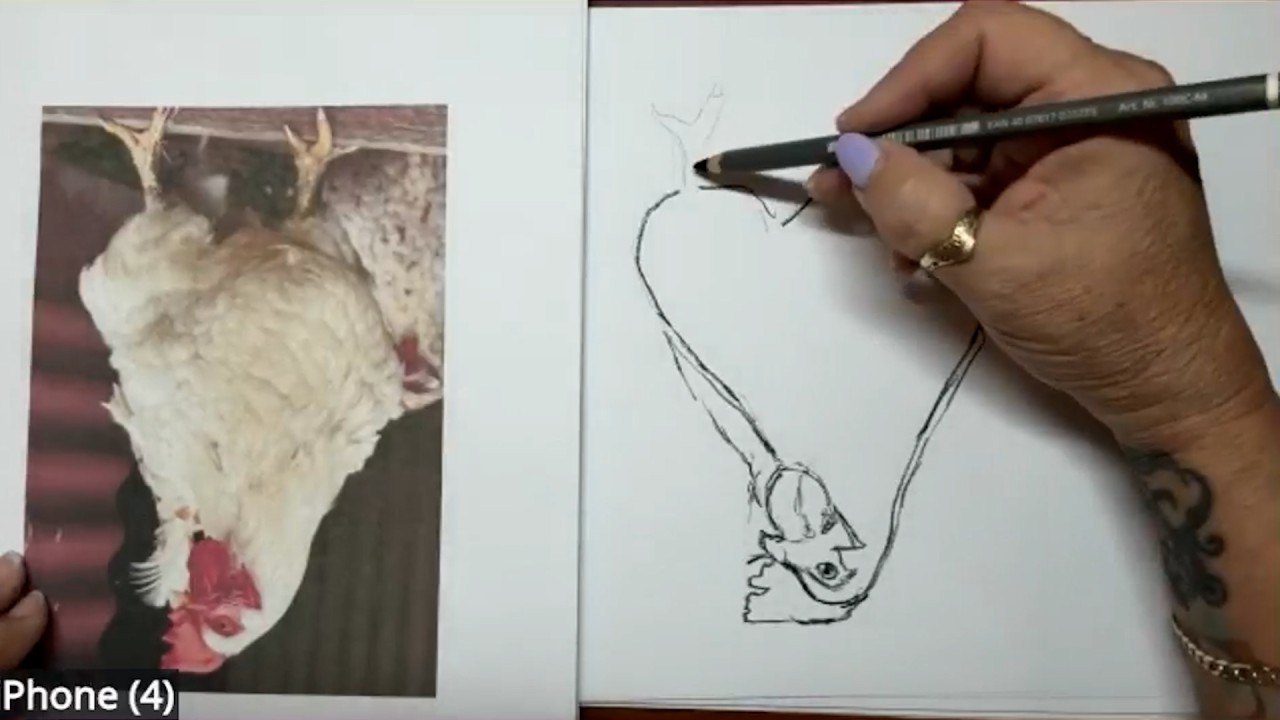
Exercise 1: The Upside-Down Drawing
This is one of the most famous drawing exercises ever taught.
Take a simple line drawing of a bird and turn it upside down before you begin copying it.
At first, this seems strange. Why make things harder?
The answer is that when the drawing is upside down, your brain has difficulty recognising it as a bird. Instead of saying, "I'm drawing a bird," you begin noticing individual lines, angles, curves, and shapes.
Suddenly, you're observing rather than relying on memory.
Many people are surprised to discover their upside-down drawing often turns out more accurate than when they draw the image the right way up.
Exercise 2: Blind Contour Drawing
For this exercise, grab a sheet of scrap paper and crumple it up.
Place it on the table and draw it without looking at your paper.
Yes, really.
Keep your eyes focused on the crumpled paper and slowly follow every edge, fold, and wrinkle with your eyes while your pencil moves across the page.
The finished drawing will probably look messy.
That's perfectly normal.
The purpose isn't to create a beautiful drawing. The purpose is to strengthen the connection between your eyes and your hand.
This exercise teaches you to slow down and truly observe.
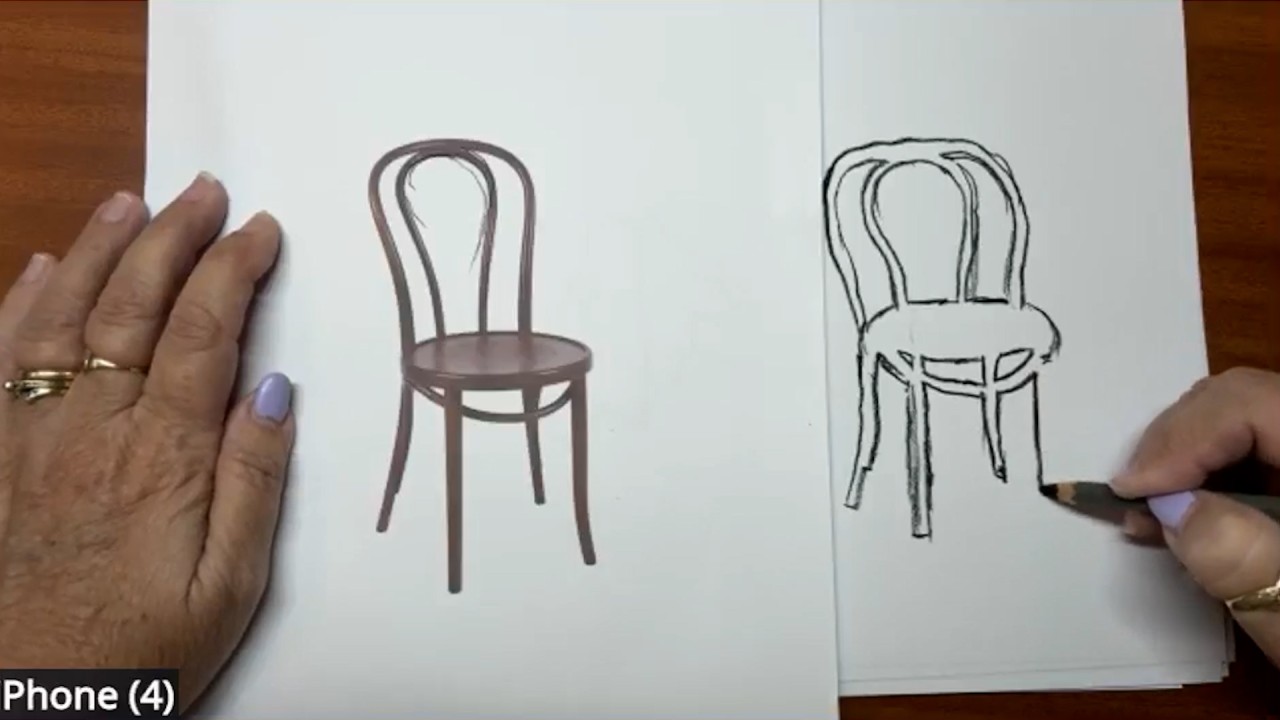
Exercise 3: Drawing Negative Space
When we draw an object, our brains immediately start naming it.
Chair.
Bird.
Tree.
Fence post.
Negative space drawing turns that idea upside down.
Instead of drawing the object itself, draw the shapes around it.
A simple chair is a perfect example. Rather than drawing the chair, focus on the spaces between the legs, beneath the seat, and around the backrest.
Suddenly, you're no longer drawing a chair.
You're drawing abstract shapes.
And because your brain isn't relying on symbols, your proportions often improve dramatically.
The same concept applies to wildlife art. The spaces around antlers, between bird legs, or around branches can often be easier to draw than the objects themselves.
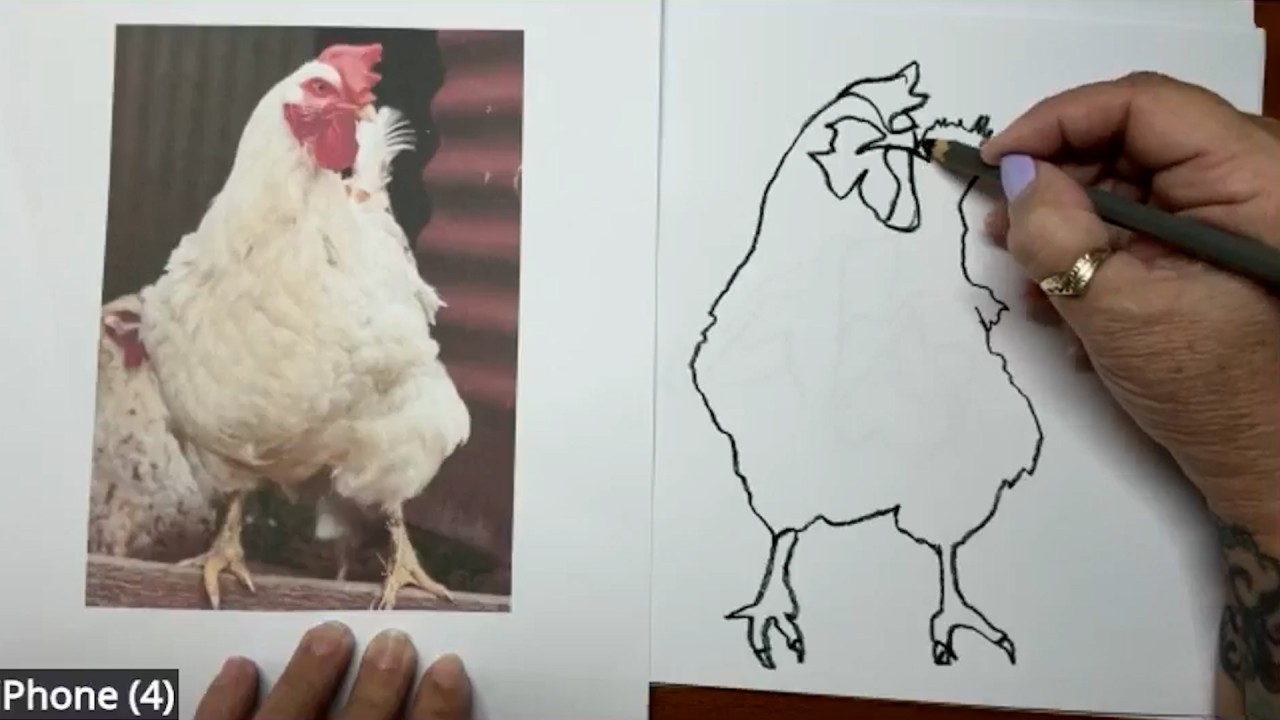
Exercise 4: Continuous Line Drawing
Choose a simple subject such as a chicken, sheep, or bird.
The challenge is to draw it without lifting your pencil from the paper.
No stopping.
No erasing.
No fixing mistakes.
Just keep moving.
This exercise helps loosen up perfectionism and encourages you to focus on the overall flow of the subject rather than getting stuck on tiny details.
It's also a great reminder that not every drawing needs to become a finished artwork.
Sometimes the value lies in the practice itself.
What These Exercises Teach Us
At first glance, these exercises can seem unrelated to creating realistic wildlife art.
But they're all teaching the same skill.
Observation.
Every realistic painting begins with seeing.
When we stop drawing what we think we know and start drawing what is actually there, everything improves—proportion, values, edges, and ultimately realism.
The next time you're feeling stuck, try spending ten minutes on one of these exercises before beginning your artwork.
You might be surprised how much easier it becomes to see what has been there all along.
Because great drawing isn't about learning to draw better.
It's about learning to see better.