Ugly Sketchbooks and why we need them
 Kerri Dixon
A messy sketchbook might be more valuable than a perfect one. Let’s talk about perfectionism, creativity, and why not all art needs to be shared.
Ugly Sketchbooks & Why We Need Them
There’s something funny that happens when we become adults.
We stop allowing ourselves to be beginners.
As kids, we would draw on anything. Scrap paper, school books, the back of worksheets, cardboard boxes. We didn’t care if it looked good. We experimented. We scribbled. We played. We learned by making messes.
But somewhere along the way, creativity became serious.
Now we buy beautiful sketchbooks and become too scared to ruin the first page.
We compare ourselves to polished Instagram sketchbooks where every spread looks like it belongs in a gallery. We pressure ourselves to make every drawing frame-worthy. We avoid experimenting because we don’t want to “waste” expensive paper or supplies.
And for realism artists especially, this pressure can become even stronger.
We’re so used to trying to make things accurate, detailed, and polished that we forget creativity is also supposed to be playful.
That’s something that really stood out to me recently during a Zoom chat I hosted with local art therapy practitioner Samantha Smith from Living Art Hervey Bay. We had a fascinating conversation about creativity, mental wellbeing, perfectionism, and why so many adults struggle to create freely again later in life.
One of the biggest things I took away from that conversation was this:
Not all art is meant to be shared.
Sometimes art is simply a way of expressing ourselves.
Not for social media.
Not for approval.
Not for selling.
Not for galleries.
Not even for improvement.
Just for us.
The Pressure To Make “Good Art”
I think many artists carry around an invisible pressure to constantly produce something worthwhile.
Especially now that social media has become such a huge part of being an artist.
It’s very easy to start viewing every sketch as potential content.
Every painting as something that should be posted.
Every page as something that needs to look impressive.
But sketchbooks were never meant to be perfect portfolios.
They were meant to be thinking spaces.
Messy spaces.
Places where ideas form before they become finished artworks.
Places where colour combinations are tested.
Where compositions are explored.
Where bad drawings happen.
Where mistakes happen.
Where emotions can come out without judgement.
And honestly, some of the most important creative growth happens in those messy, unfinished pages.
Why Adults Struggle With Creativity
During our conversation, Samantha talked about how adults often struggle with creativity because we’re no longer comfortable being beginners.
As children, we learned through experimentation. We expected mistakes.
We were willing to do things badly while learning.
As adults, many of us expect competence immediately.
We’ve become skilled in other areas of life — careers, parenting, relationships, running households — and suddenly being “bad” at something again feels uncomfortable.
So instead of experimenting, we hesitate.
We compare.
We overthink.
We judge ourselves.
We stop before we even begin.
Perfectionism quietly starts suffocating creativity.
And I see this all the time with artists.
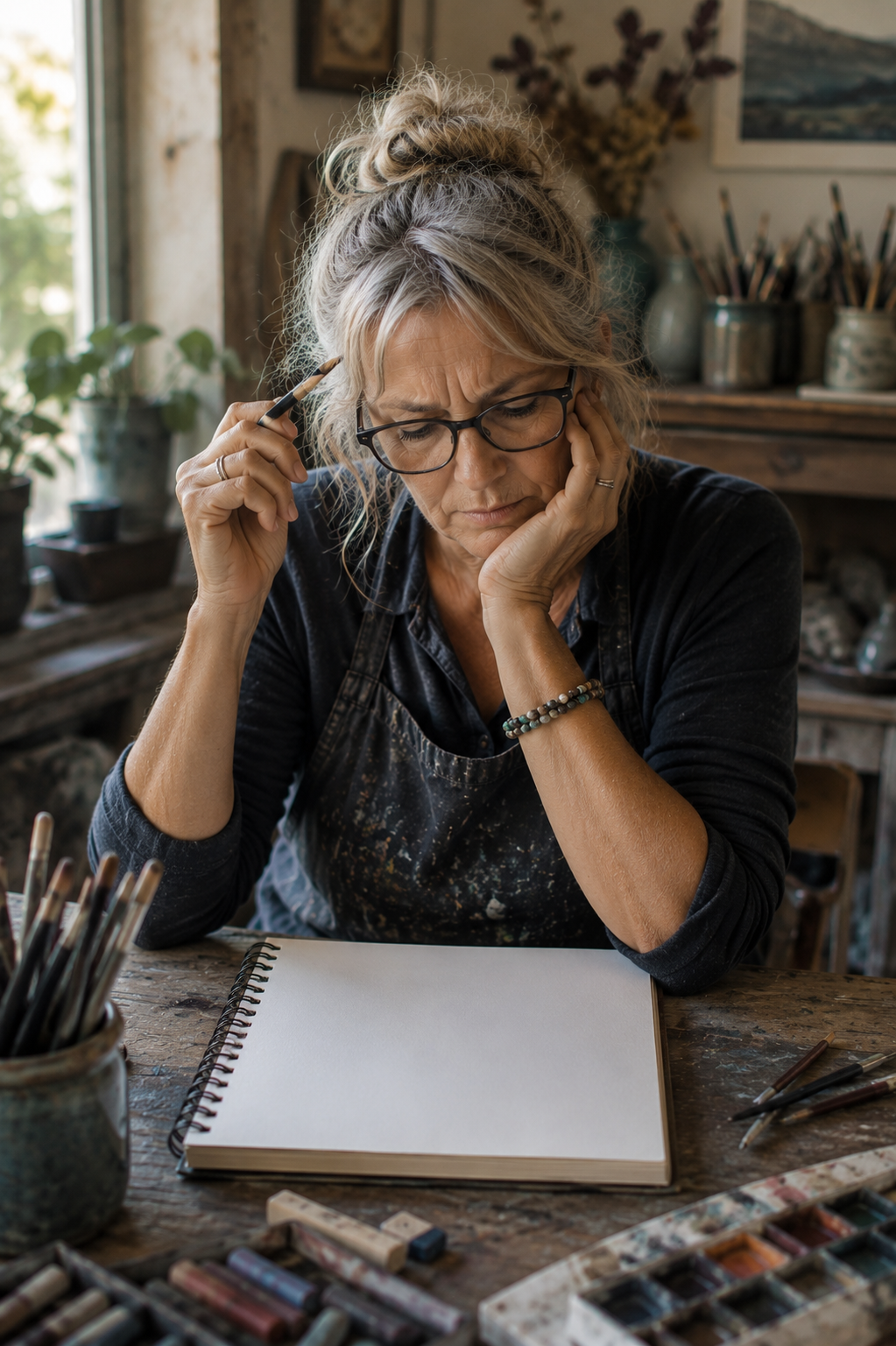
People afraid to start a sketchbook because they might ruin it.
People scared to try a new medium.
People abandoning unfinished work because it doesn’t match the vision in their head.
People believing every piece needs to be “good” to be worthwhile.
But creativity doesn’t grow through perfection.
It grows through repetition, curiosity, experimentation, and play.
The Sketchbook Nobody Else Needs To See
One of my favourite parts of the conversation was discussing journals and sketchbooks that are messy, emotional, experimental, and completely private.
Not the beautiful curated sketchbooks we often see online.
The real ones.
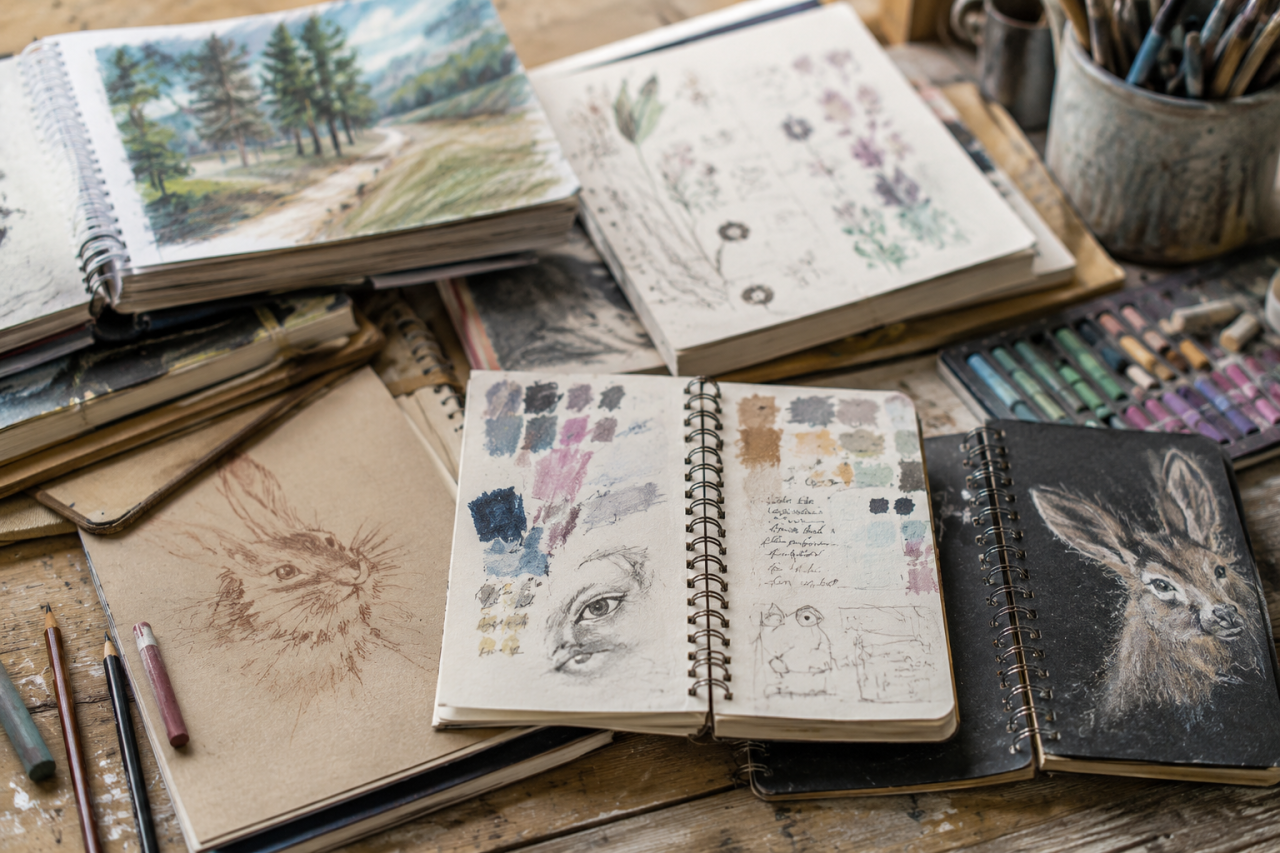
Pages full of colour swatches, scribbled notes, rough thumbnails, glued-in scraps, half-finished ideas, random thoughts, ugly sketches, and emotional expression.
The kind of pages that mean something to you, even if nobody else understands them.
Samantha shared some art therapy exercises that really connected to this idea:
- Drawing emotions through colours and shapes
- Creating a “negative” page and then a “positive” page
- Writing words and thoughts around artwork
- Journaling visually instead of trying to create polished art
- Listing things that bring joy and calm
These exercises weren’t about artistic skill.
They were about expression.
And I think many artists need permission to return to that kind of creativity again.
Maybe The Ugly Sketchbook Is The Important One
The older I get, the more I realise creativity doesn’t always need to be productive to matter.
Not every drawing needs to become a finished artwork.
Not every sketch needs to become content.
Not every creative session needs to result in something impressive.
Sometimes creativity is simply how we process life.
Sometimes it’s how we reconnect with ourselves.
Sometimes it’s where ideas begin.
Sometimes it’s where confidence slowly rebuilds.
And sometimes the messy, imperfect, ugly sketchbook ends up being far more valuable than the polished one.
Because it contains honesty.
Experimentation.
Growth.
Play.
Freedom.
Maybe that’s what sketchbooks were meant for all along.
If you’ve been feeling creatively stuck lately, maybe this is your permission slip to stop trying to create perfect pages.
Make the messy sketch.
Test the weird colour combination.
Write thoughts beside your drawings.
Glue scraps into a journal.
Create something nobody else ever sees.
You might be surprised what starts flowing once perfection stops leading the process.
Kerri xx