Why it's the best time to be an artist
 Kerri Dixon
In a world obsessed with convenience, discover why creativity, community, and lifelong learning make this the best time in history to be an artist.
Why There Has Never Been a Better Time to Be an Artist
For generations, artists have been burdened by the same old stories.
"Art isn't a real job."
"You can't make a living from creativity."
"You're either born talented or you're not."
And perhaps the most damaging one of all:
"You're too old to start."
But the more I think about it, the more I believe that there has never been a better time in history to be an artist.
Now, before you assume I'm talking about becoming famous, selling thousands of paintings, or quitting your job to pursue art full-time, that's not what this article is about.
Most of the artists I teach aren't trying to build a six-figure business. They're looking for something much more meaningful.
They want to learn.
They want to improve.
They want to create beautiful work.
They want to connect with other artists.
They want to make time for themselves again.
And when you look at it through that lens, artists today have opportunities that previous generations could only dream about.
Learning Has Never Been More Accessible
Imagine trying to learn realistic wildlife art fifty years ago.
You might have found a book at the local library.
You may have attended the occasional workshop if one happened to come through town.
If you lived in a regional area, your options were often limited.
Today, we can learn from artists all over the world without leaving home.
We can watch demonstrations in real time.
Pause and replay lessons.
Join memberships.
Attend online workshops.
Ask questions.
Receive feedback.
The amount of education available to artists today is extraordinary.
Whether you're a complete beginner or an experienced artist looking to refine your skills, there has never been more information at your fingertips.
Community Is No Longer Limited By Geography
One of the biggest changes I've witnessed is the growth of online creative communities.
Art can be a solitary pursuit.
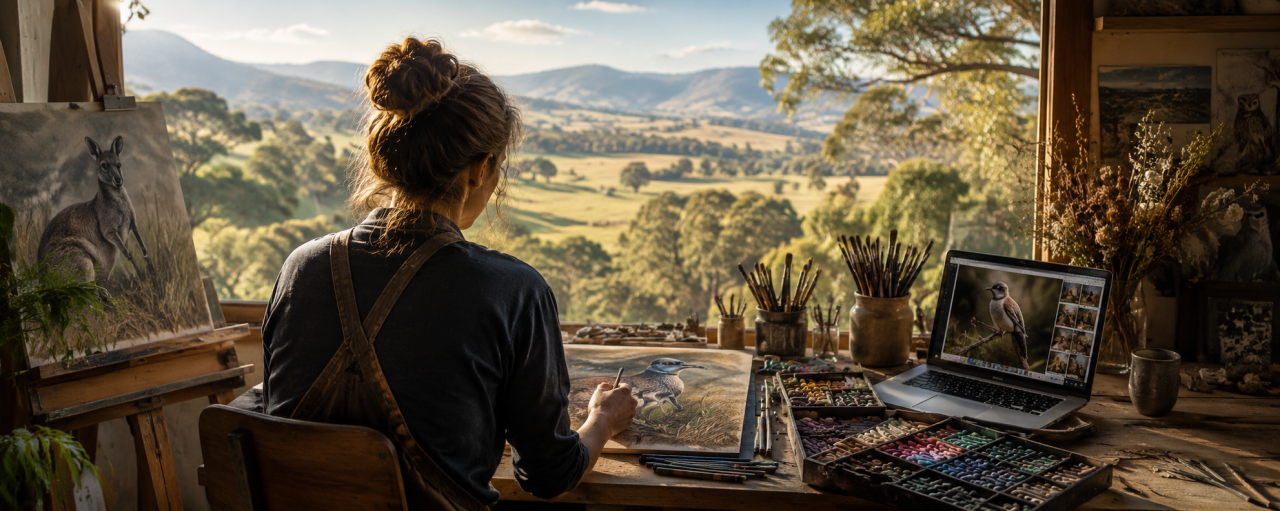
Many of us work alone at a kitchen table, in a spare room, or tucked away in a home studio.
But we're no longer isolated.
Today it's possible to connect with artists from across Australia and around the world.
You can share your work, celebrate successes, ask for advice, and encourage others on the same journey.
I've seen friendships form inside The Creative Barn between people who would never have met otherwise.
That sense of connection is incredibly valuable, particularly for those returning to art later in life.
We Are Living Longer
One of the most common things I hear is:
"I'm too old."
But are you really?
If you're sixty today, you may still have twenty-five or thirty years ahead of you.
That's enough time to become highly skilled.
Enough time to create hundreds of artworks.
Enough time to learn a completely new medium.
Many people assume opportunity belongs to the young, but creativity doesn't have an expiry date.
In fact, many artists are just getting started when they retire.
Better Tools Than Ever Before
I witnessed the impact of technology firsthand through my signwriting career.
When I first started, computers had only just entered the industry. We were one of the first signwriting businesses in our area to embrace the technology. Those early computers were huge box-shaped machines that took up half the desk!
At the time, we used vinyl cutters to create lettering and graphics. Then digital printing arrived, and suddenly it became possible to print photographs and custom images directly onto signs.
Before that, everything was hand painted.
If someone wanted a portrait or an image on a sign, they needed to find a signwriter with the artistic skill to paint it by hand. The old signwriters were incredible artists.
Sadly, I watched some talented signwriters leave the industry because they felt they were too old to learn the new technology.
Looking back, I think that's a shame.
The technology didn't replace creativity.
It simply changed the tools we used.
The same thing is happening today.
Technology continues to evolve, but creativity remains at the heart of what we do.
AI Isn't Replacing Artists
A recent conversation with one of my students reminded me of this.
She was working on a pet portrait commission of a white fluffy dog. As often happens, the client supplied a less-than-perfect reference photo. The dog's eyes were very dark, and there was very little visible detail.
Years ago, she might have spent hours guessing.
Instead, she used an AI image enhancement tool to clarify the photograph.
Within moments, details around the eyes became much easier to see.
Did the AI create the artwork?
No.
Did it make artistic decisions?
No.
Did it replace the artist?
Not even close.
The artist still needed to understand values, edges, texture, proportions, and colour.
The technology simply helped solve a problem.
That's how I believe many artists will use technology moving forward—not as a replacement for creativity, but as a tool that helps remove unnecessary obstacles.
In a World of Convenience, Art Matters More Than Ever
There's another reason I think creativity is thriving right now.
Modern technology is constantly removing friction from our lives.
We can stream movies instantly.
Order food with a few taps.
Shop online.
Use GPS instead of maps.
Ask AI to answer questions.
Everything is becoming faster and easier.
Yet at the same time, people are returning to activities that require effort.
Gardening.
Knitting.
Pottery.
Journaling.
Painting.
Drawing.
Why?
Because these activities aren't about convenience.
They're about experience.
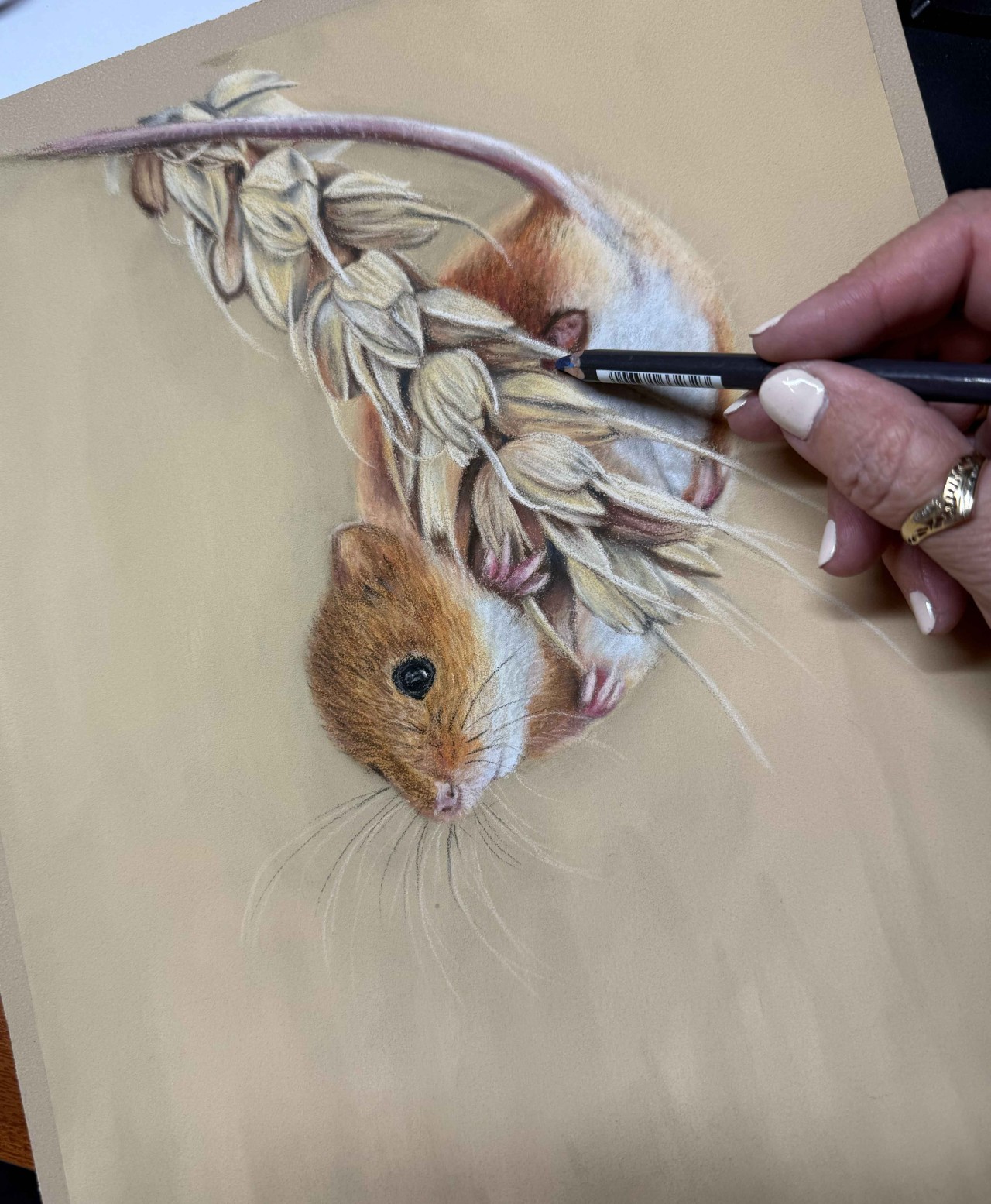
Nobody paints a picture because it's the fastest way to get a picture.
Nobody keeps a sketchbook because it's the easiest way to record an idea.
We do these things because the process itself is rewarding.
Art asks us to slow down.
To observe.
To focus.
To create something with our own hands.
And in a world obsessed with speed, that has become incredibly valuable.
Success Looks Different For Everyone
One of the biggest mistakes artists make is assuming success only means making money.
For some people, success might mean selling paintings.
For others, it might mean entering an exhibition.
Or finishing a sketchbook.
Or learning to draw realistic fur.
Or simply making time for creativity each week.
The beauty of being an artist today is that you get to define success for yourself.
There are more opportunities than ever to learn, grow, connect, and create.
The Best Time to Start Is Now
The more I reflect on the opportunities available to artists today, the more optimistic I become.
We have access to education, community, materials, technology, and creative opportunities that previous generations could scarcely imagine.
You don't need permission to call yourself an artist.
You don't need a gallery.
You don't need a degree.
You don't need to be young.
You simply need the willingness to learn and create.
And if that's your goal, I honestly believe there has never been a better time in history to be an artist.